Andrew Yeckel > Stories > Fond Du Lac stone edging
Fond Du Lac stone edging
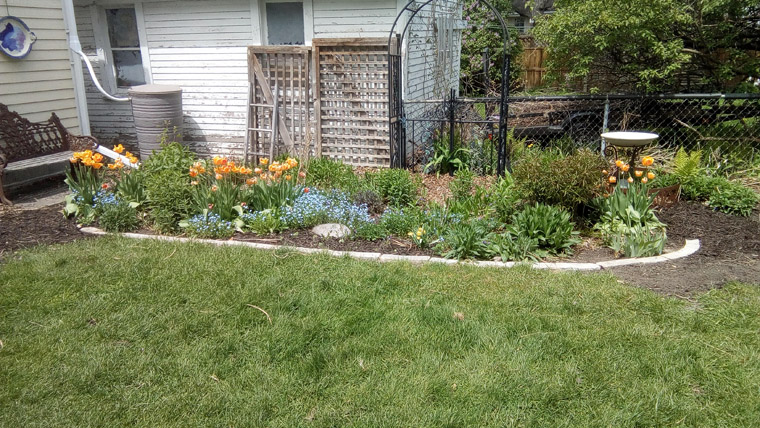
My first landscaping project this summer is to install 170 linear feet of stone edging. Currently we have plastic edging in some areas, brick in others, and nothing at all in a few places. None of it has been effective at stopping the lawn from invading the gardens. Three years ago we worked with a landscape architect to create a sunken rain garden. Part of the project was a 40 foot stretch of stone edging. It has worked very well, so I have decided to extend it everywhere to give the yard a more unified look.
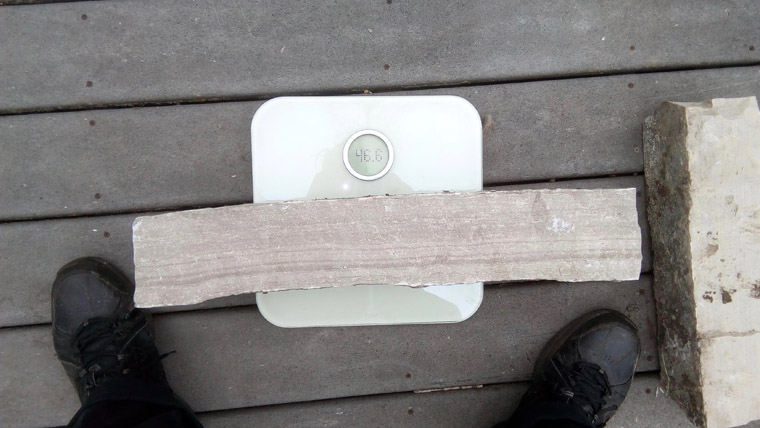
I bought 3000 pounds of 4 x 4 inch stone and 1500 pounds of leveling sand. This stuff is heavy. Here is one of the longer stones, weighing in at 46.6 pounds. Average weight is slightly more than 20 pounds.
I am burying the stone most of the way into the dirt. The plants have been removed from this bed and will be replanted after the edging is installed.
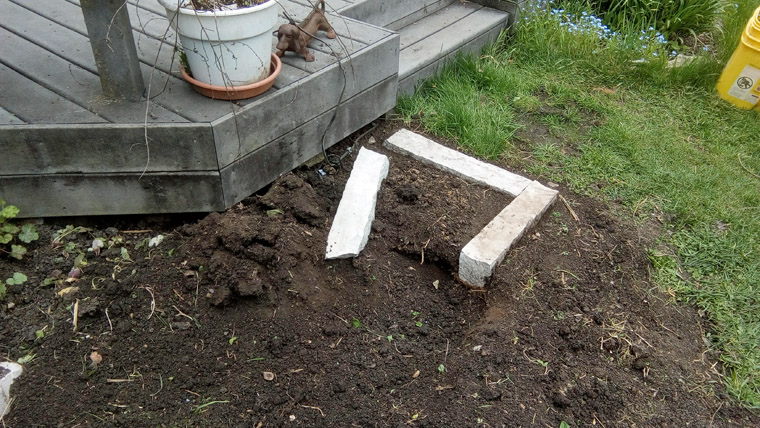
Our lawn is very old. Cutting through the thick turf with a shovel is quite a lot of work.
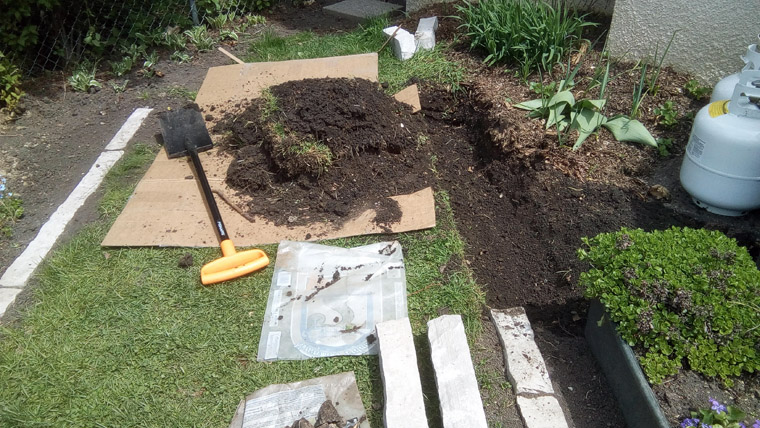
Before I bury it, I lay out a run of stones on the surface. Each stone is different, so I need to try several pieces before choosing the next one. This means picking up each stone many times before its final location is determined.
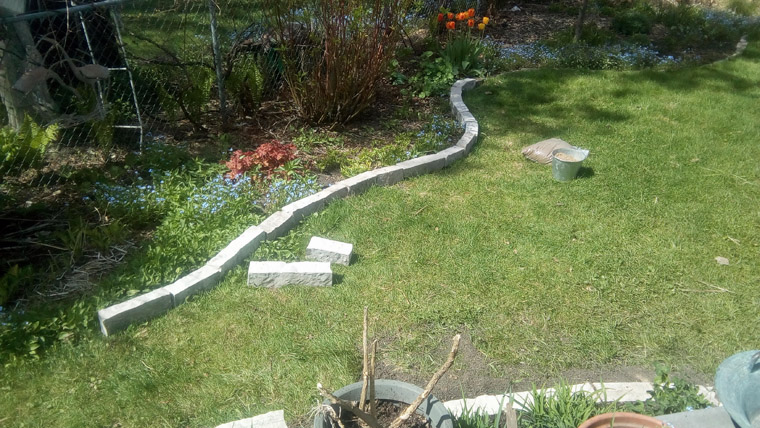
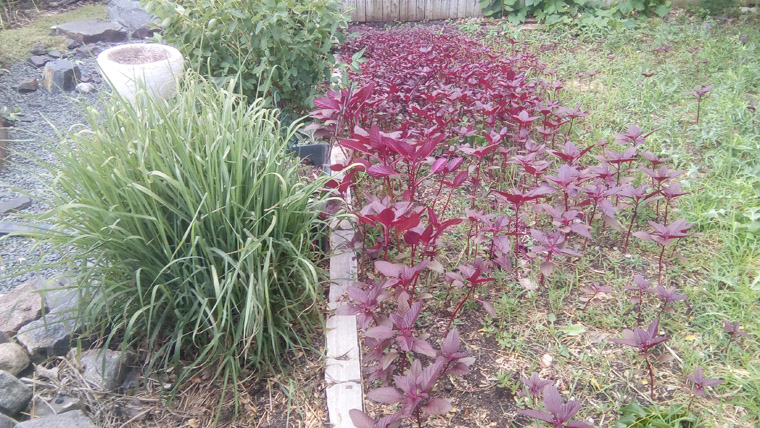
Here is the finished look a few weeks later, after the vegetation has grown some.
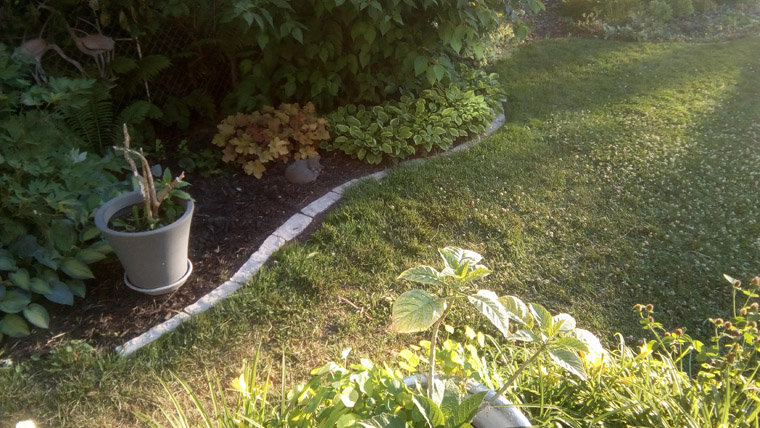
Here is another completed stretch.
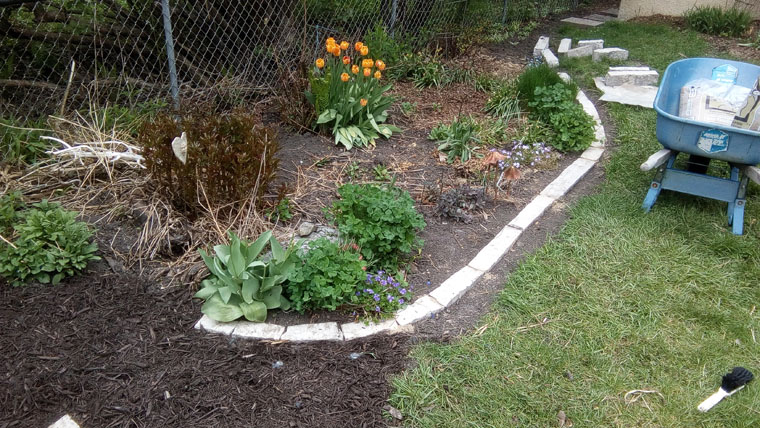
And another.
I've also been setting some stepping stones. Here I've lined the bottom of a hole with gravel, then sand.
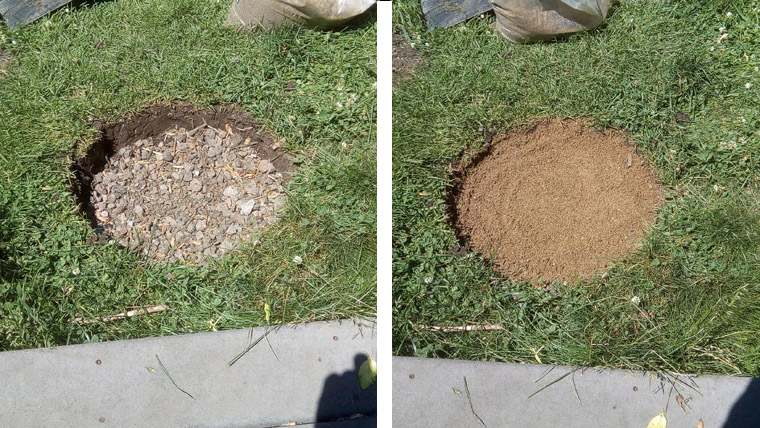
Then the stepping stone.
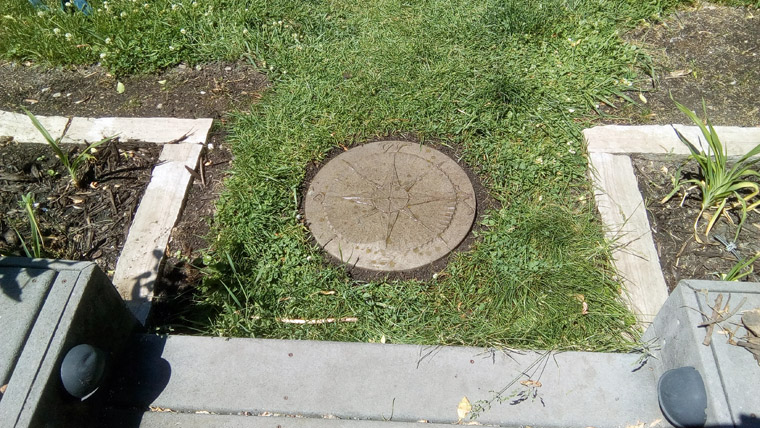
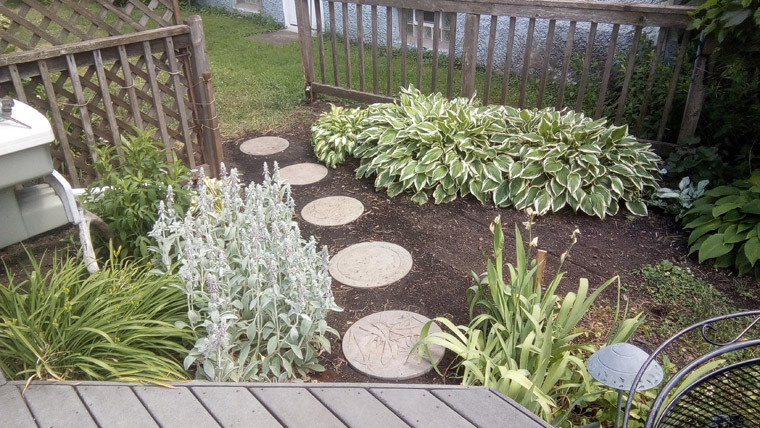
Here are some other stepping stones I have set.
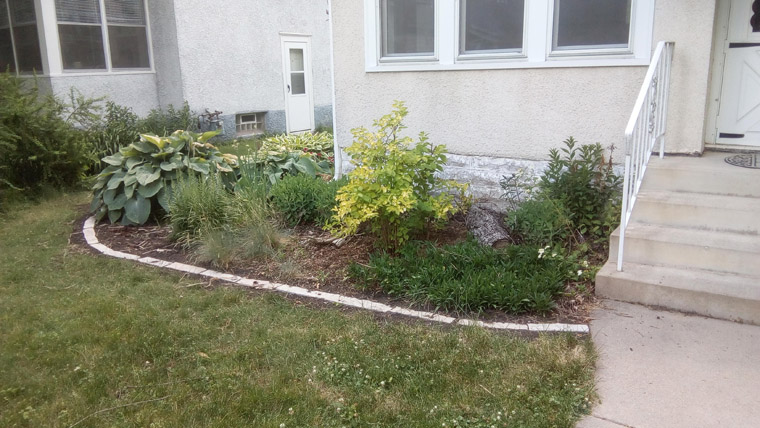
Here is the new edging in the front yard.
In the side yard.
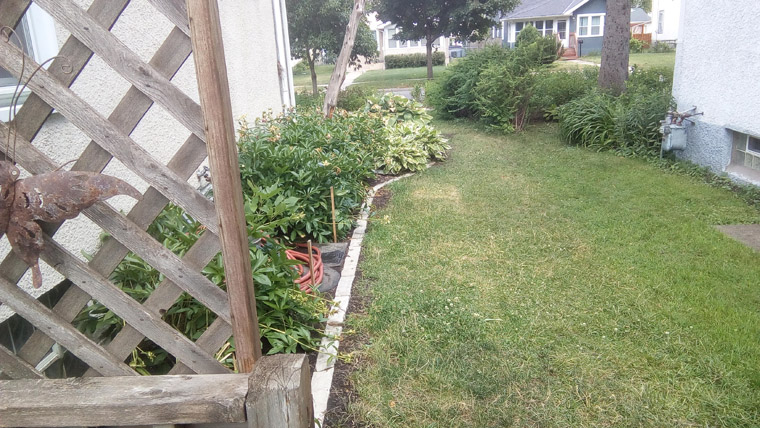
Along the back property line. Our yard is to the left of the edging.
Quite a lot of stuff has been buried in our yard over the years. When digging I occasionally find remnants of metal cans and broken glass, things that could not be burned in the days when everyone incinerated their trash. Sometimes more interesting objects appear. Here are some things I've dug up during the landscaping work.
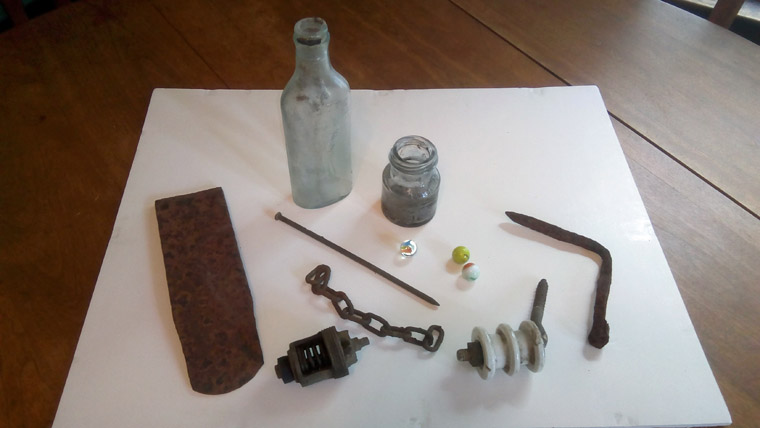
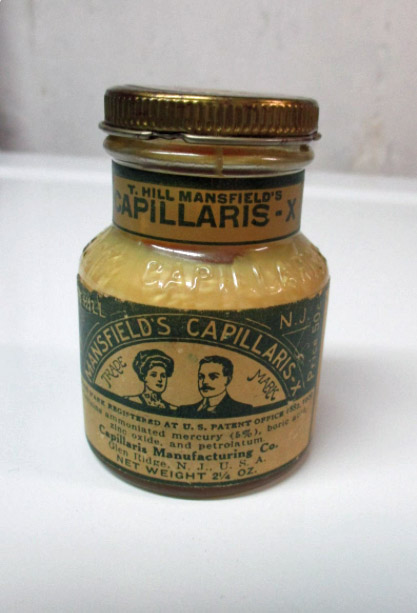
These include a plow blade (far left), a handmade railroad spike (far right), an early 1900s porcelain electrical insulator (lower right), a rusted piece of chain, a 7 inch nail, three marbles, and two bottles. Next to the plow blade is a piece of hardware with a heavy coil spring that appears to be some type of shock absorber. The larger bottle once held Scott's Emulsion Cod Liver Oil, first sold in the 1880s and still sold today. This style of bottle dates to the 1920s or 1930s. The smaller bottle once held Hill Mansfield's Capillaris-X medicinal ointment. This product was first sold in 1882. Here is a picture I found online that shows an unopened jar from the 1930s.
The landscape edging project was a huge amount of work. It took me a month to finish, but it was well worth it.