Andrew Yeckel > Stories > Basement wall mystery
The basement wall mystery
Our basement walls have some curious features that I've never understood until now. One of the walls, and part of another, are built from cement blocks stacked in a running bond pattern. These blocks are 6x24 inches on the face, and 12 inches thick. They extend from floor to ceiling of the basement.

The cement blocks are covered in a thick masonry sealer that has sloughed off in some places, which happens when water penetrates the foundation from outside. Staining from mildew confirms the presence of water in this corner of the basement:
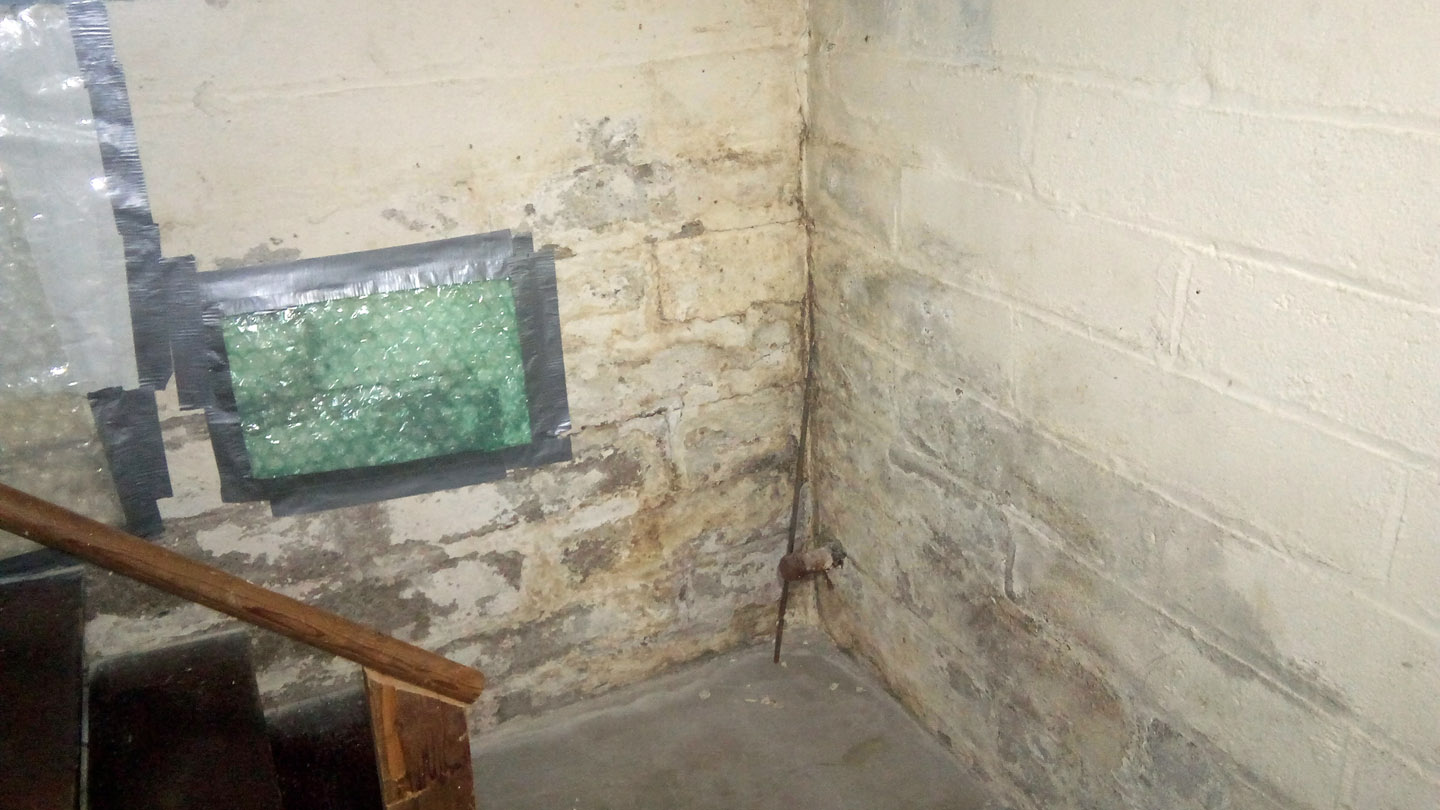
Nevertheless, these walls are in good condition for a basement this old. I have scraped this wall. After some minor crack repairs it can be cleaned and painted.
We have taken several steps to improve drainage around the foundation since we bought the house. Water penetration has been mitigated, but moisture damage is extensive in some parts of the basement. Here is part of a wall that shows signs of water penetration:
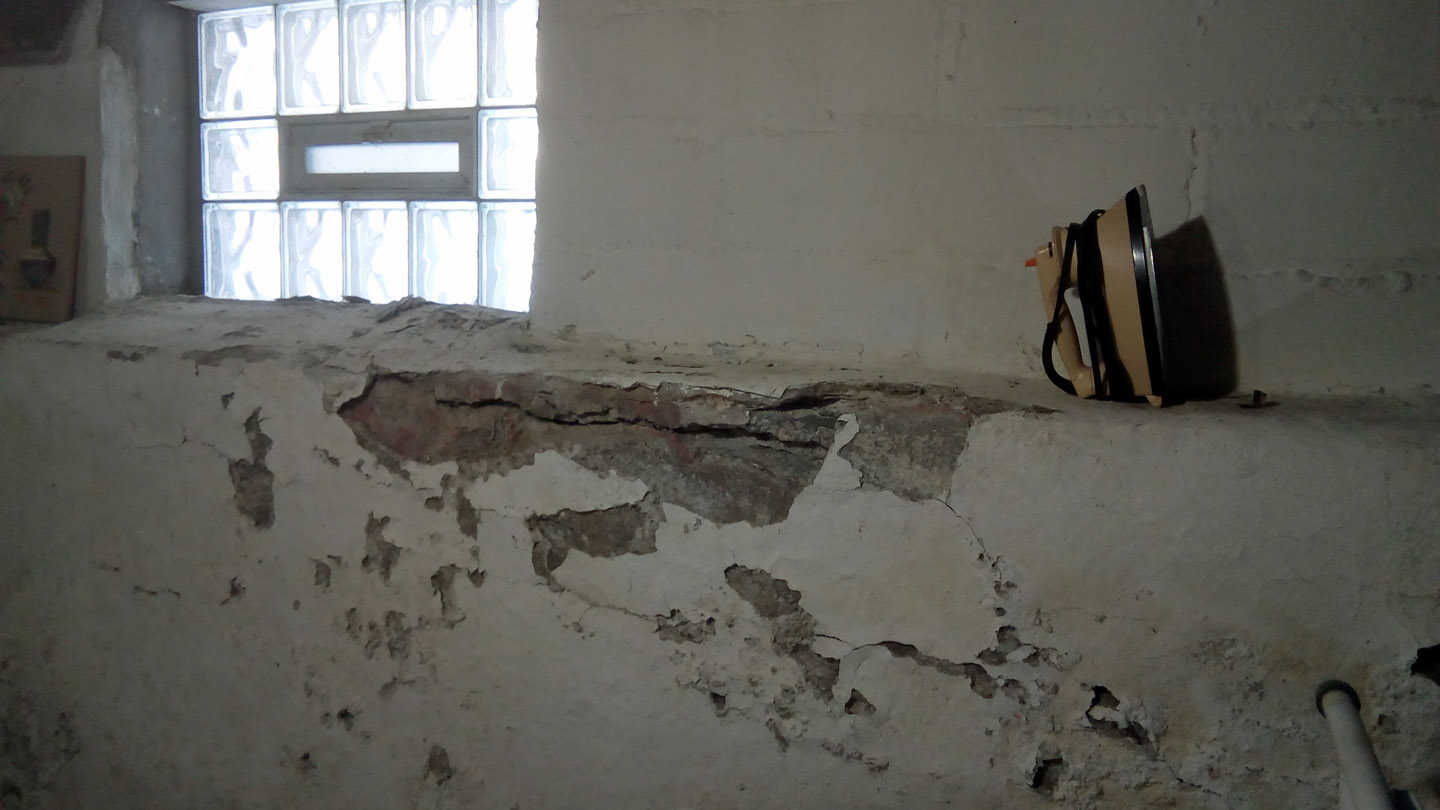
The construction of this wall is evidently different than the cement block walls shown in the previous pictures. The top of the wall, the part that is visible from the outside of the house, is made of the same cement blocks found in the other walls. Below that is a much thicker wall, covered in mortar. The top of this shorter wall forms a ledge at about eye level in the basement, which is grade level outside. Here is a wall section where I have scraped off most of the crumbling top coat:
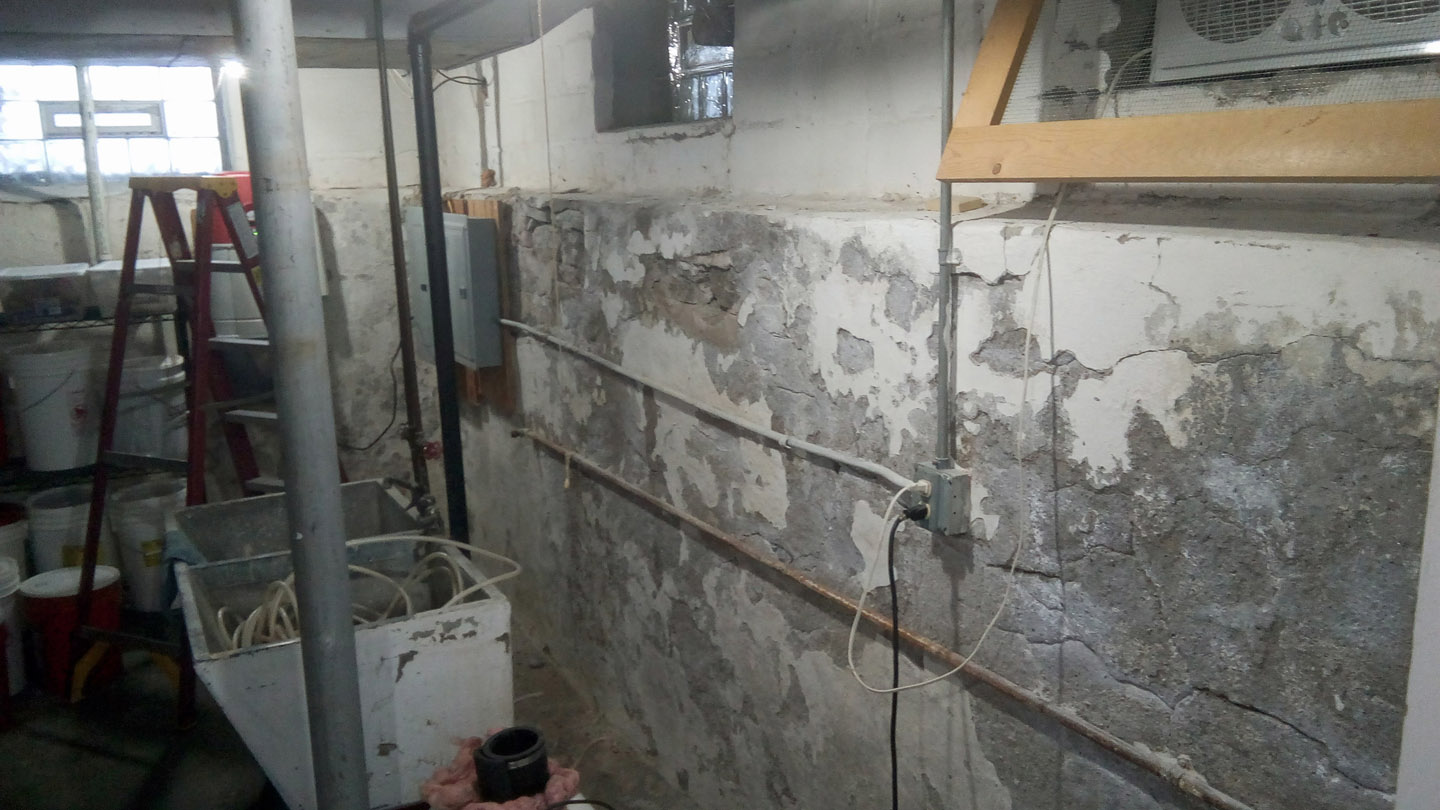
Beneath the top coat is a thick layer of mortar. It has broken off in a few places, revealing field stone underneath. I've labeled these elements in the picture below:
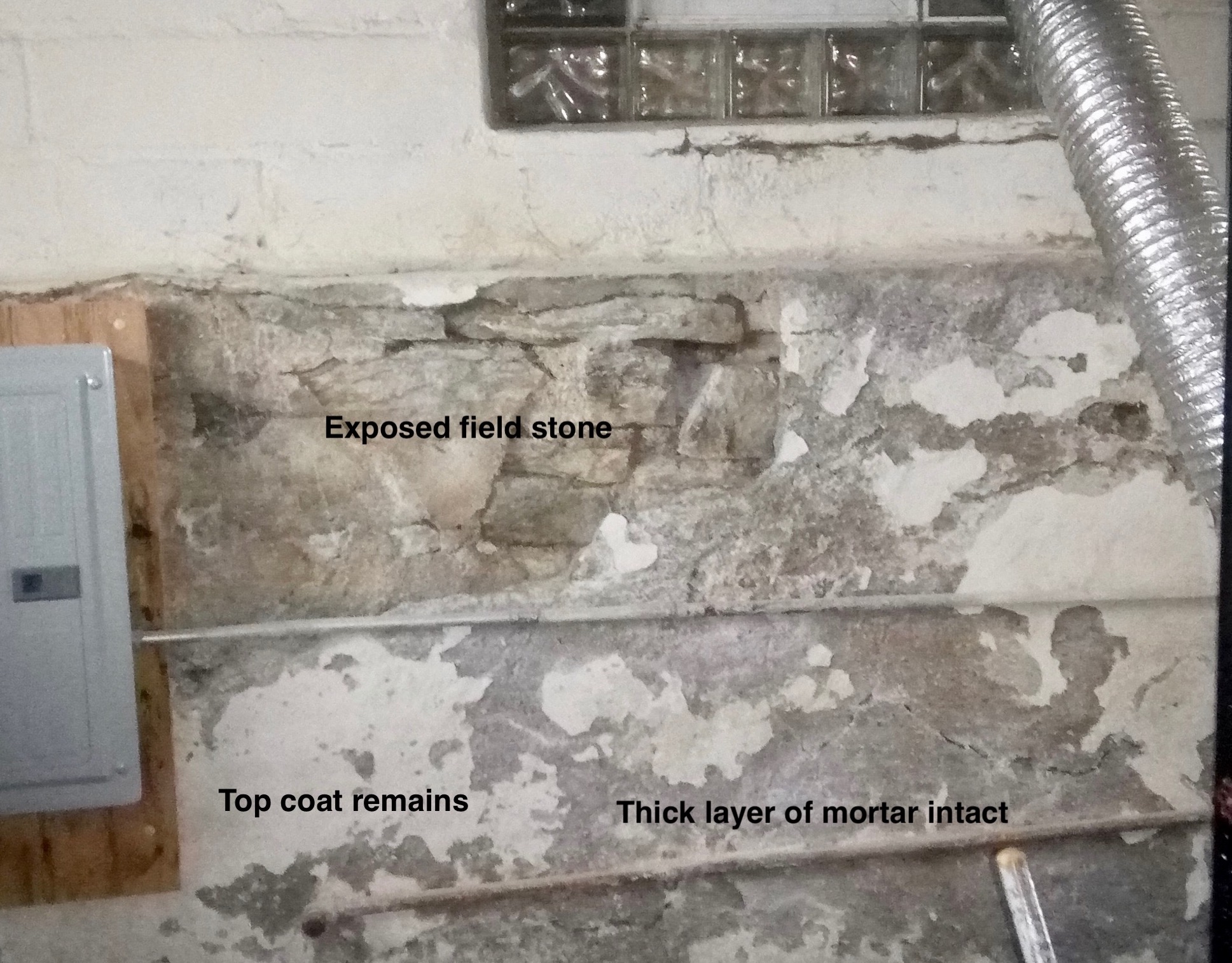
Despite its ugliness, this is largely a cosmetic problem without any structural implications. I have probed the gaps between stones and determined that the stone wall extends underneath the cement blocks. Two of the walls and part of another wall were built with this construction method. I made this diagram showing the front, side, and top views of the foundation wall that was constructed using both methods:
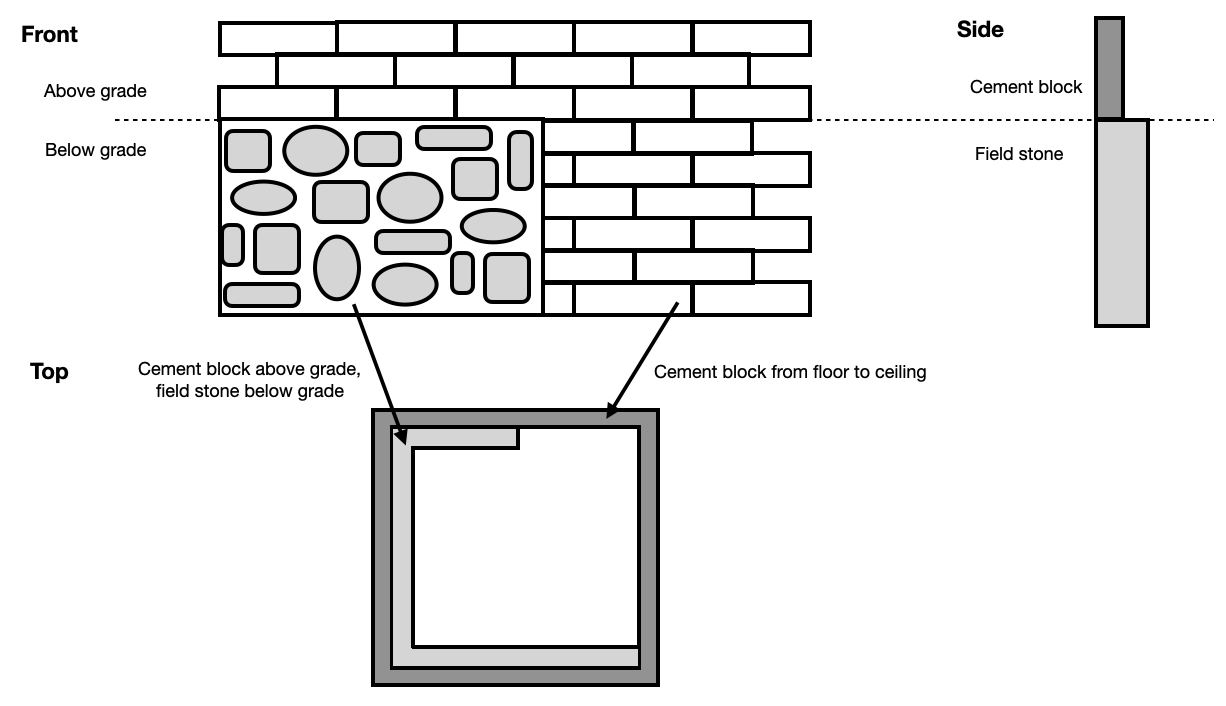
Stone foundations are characteristic of homes built before 1900. Sometimes the part that we see above ground is made of brick for a finished look, but stone is used to carry the weight of the house. Around 1900, cement blocks came into widespread use in this region, rapidly replacing stone as the material of choice because of their advantages. Our house was built in 1908, so why was our foundation built this way? If its builders were using cement block at all, why not construct the entire foundation with it?
I think this hybrid construction method is explained by two secondary benefits of using stone: it's free, and it doesn't need hauling to or from the site. In many parts of the country, stone unearthed by digging the basement can be used to build its foundation. In fact, getting rid of the stone was a hassle. In 1908, it would have been necessary to move construction materials by horse and cart from the nearest rail line to the building site. Earth from digging the basement could be spread about the lot, but a large unsightly pile of stones would remain. I can see the appeal of putting the stone back in the hole and buying half as many cement blocks, which I imagine were somewhat pricey back then, not to mention heavy to deliver.
In more general terms, I think it reflects a culture of frugality. It was an era of first and second generation immigrants from resource poor areas of northern Europe. This frugality also shows up in how little lumber was wasted building our house. You can see this in how some parts of the framing are cobbled together from scraps of wood that were leftover after building other parts of the house. Thoughtful, skillfully executed improvisations get the job done with a minimum of waste.